RESONANCE
Controlled commercial fishing experiments combining gear-contact measurement, seabed mapping and sediment analysis to quantify trawling disturbance.
Using commercial sea trials and underwater behavioural observation to understand how fish interact with trawls, then designing practical escape systems around what they actually do.
Project
PiscesGate / SafetyNet fisheries technology
Focus
Bycatch reduction and fish behaviour in commercial trawls
Approach
Controlled sea trials, paired-gear experiments, underwater video and rapid prototype development
Role
Concept development, grant proposal, experimental design, commercial fishing trials,
statistical analysis and interpretation
Reducing unwanted bycatch is one of the persistent challenges in commercial fishing. Conventional selectivity measures usually modify the physical structure of the gear, but fish are not passive particles moving through a net. They swim, orient, react to visual cues and make repeated behavioural decisions during capture.
PiscesGate began with a simple question: could those behavioural responses be used deliberately to improve selectivity without disrupting normal fishing operations or reducing commercial catch?
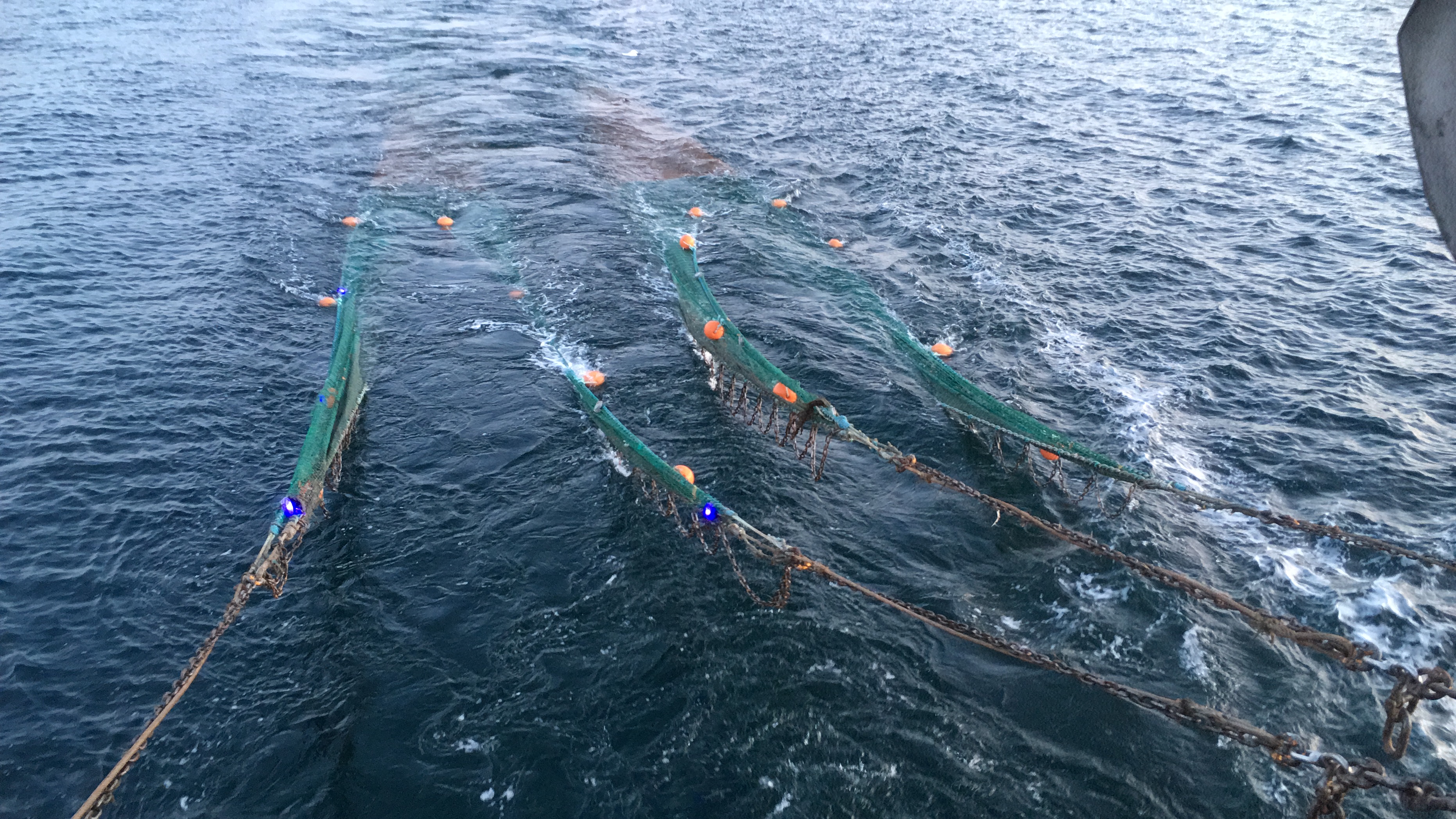
The initial concept explored light-based cues as a retrofit technology for Nephrops and squid fisheries. The scientific programme was developed around commercial sea trials so that the idea could be tested under the operating conditions in which any successful technology would ultimately have to work.
Commercial vessels were used as experimental platforms rather than treating fishing as a simplified laboratory system. Treatments were interspersed through time, between paired nets and across fishing grounds to reduce confounding while maintaining realistic fishing operations.
Catch comparisons provided the experimental outcome, but underwater CatchCam systems added something more important: direct observation of fish behaviour inside the trawl. This allowed the project to ask not only whether a treatment worked, but why.
That distinction became critical. The original hypothesis was that LED lighting near the mouth of the trawl would encourage unwanted fish to escape before travelling deeper into the gear. The controlled trials did not provide convincing support for that idea.
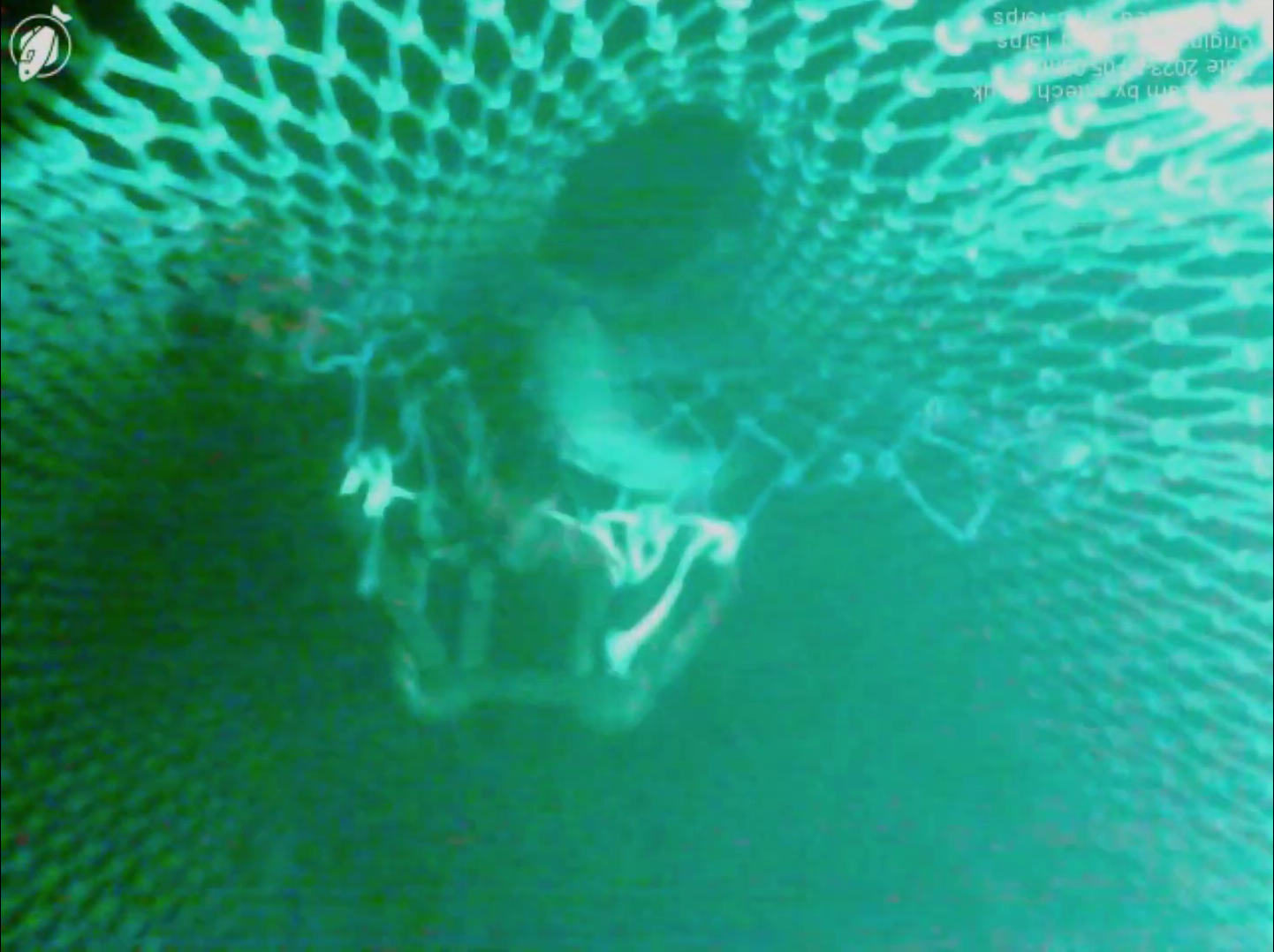
The unsuccessful light treatment could have been treated simply as a negative result. Instead, the underwater video changed the question.
Fish showed relatively little response while travelling through much of the trawl. Near the codend, however, behaviour changed markedly. Individuals became more active and repeatedly attempted to escape.
The practical opportunity was therefore not where the original design expected it to be. Rather than trying to make fish leave the net earlier, the engineering effort moved towards providing effective escape opportunities at the point where fish were already attempting to leave.
Underwater observation changed the engineering question: rather than asking fish to behave as expected, the technology could be designed around what they actually did.
Behavioural observations led to the development of prototype escape structures, including the TUNC wire frame and subsequent TUNC Tunnel. These systems were designed to create more effective escape opportunities close to the codend while retaining commercially valuable catch.
The prototypes were returned to sea and tested experimentally. Under some trial conditions the tunnel reduced unwanted bycatch by approximately 70% while maintaining commercial catches.
More importantly, the development cycle became much faster. Catch data showed whether a treatment changed the final catch; underwater video showed what happened during the process. Designs could therefore be modified in response to observed behaviour rather than relying solely on end-of-haul comparisons.
The project produced practical bycatch-reduction concepts, but one of its most useful outcomes was methodological. Direct behavioural observation turned the trawl from a black box into an experimental system.
That made it possible to distinguish between an idea that failed because the underlying behavioural assumption was wrong and one that failed because the engineering execution was poor. It also allowed new interventions to be developed from observed mechanisms rather than from assumptions about how fish ought to behave.
The work subsequently informed further Fisheries Innovation and Sustainability projects, international collaborations and continuing development of precision-fishing technology.
The objective was never to prove that a particular device worked. It was to understand the capture process well enough to design a better intervention.
Other projects using field experimentation, observation and environmental evidence to solve practical marine problems.
Controlled commercial fishing experiments combining gear-contact measurement, seabed mapping and sediment analysis to quantify trawling disturbance.
Developing suspended nursery systems that separate early seagrass establishment from transplantation to the seabed.